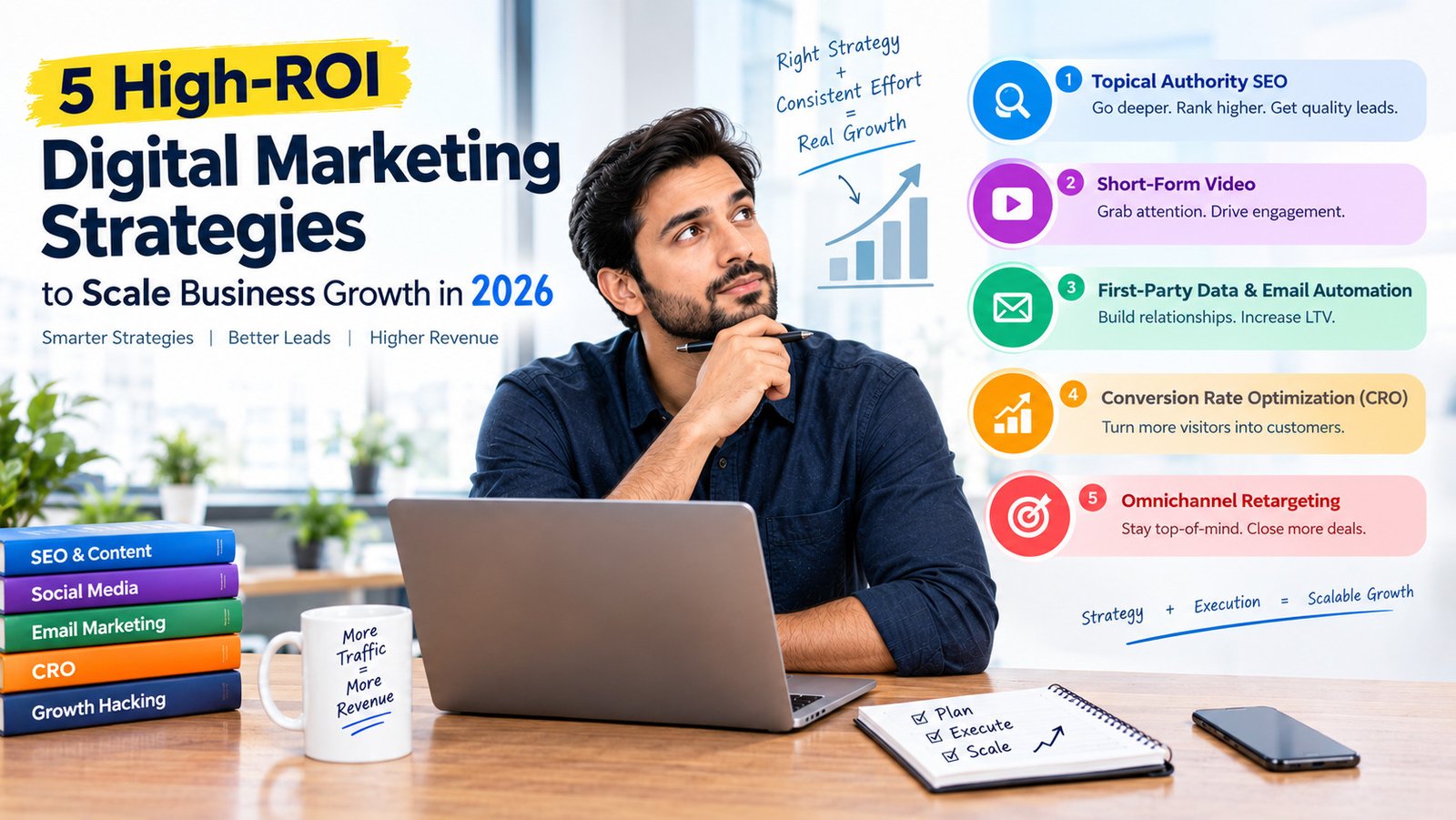

Digital Marketing Strategies: In 2026, businesses need more than a basic online presence to compete. Customers are increasingly discovering brands through search engines, social platforms, video content, email, and paid advertising. This makes it essential for businesses to invest in effective Digital Marketing Strategies that generate measurable traffic, leads, conversions, and long-term revenue.
The right approach does not necessarily mean spending more. Instead, businesses should focus on channels that deliver a strong return on investment (ROI), understand their target audience, and continuously optimize campaigns based on performance data.
Here are five high-ROI approaches businesses can use to strengthen their online presence and accelerate growth in 2026.
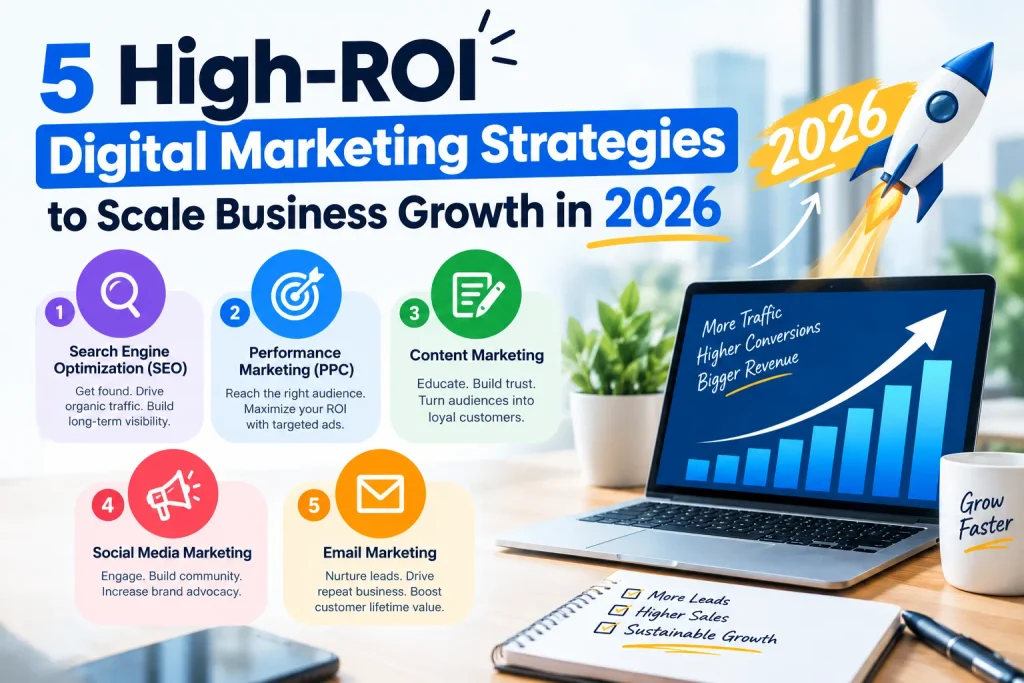
1. Search Engine Optimization (SEO)
Search engine optimization remains one of the most valuable long-term investments for businesses. Unlike paid advertising, organic search traffic can continue generating results after the initial investment in content and optimization.
A strong SEO strategy starts with understanding what your target audience is searching for. Businesses should identify relevant keywords, create useful content, optimize website pages, improve site speed, and build a clear internal linking structure.
Technical SEO is equally important. A mobile-friendly website, fast loading times, secure browsing, and an easy-to-navigate structure can improve both user experience and search visibility.
Businesses should also focus on search intent rather than simply adding keywords to content. Creating pages that genuinely answer users’ questions can help attract more qualified visitors.
For companies looking for sustainable growth, SEO is one of the Digital Marketing Strategies that can produce compounding returns over time.
2. Performance Marketing and PPC Advertising
Paid advertising can provide businesses with immediate access to potential customers. Platforms such as Google Ads and social advertising networks allow marketers to target audiences based on search behavior, interests, demographics, and other signals.
The key to profitable PPC campaigns is not simply increasing the advertising budget. Businesses need to monitor important metrics such as click-through rate, conversion rate, cost per acquisition, and return on ad spend.
Creating dedicated landing pages can also significantly improve campaign performance. Instead of sending every visitor to a generic homepage, businesses can create pages specifically designed around the advertisement and its offer.
A/B testing is another powerful technique. Testing headlines, calls to action, images, offers, and landing-page layouts can reveal what motivates customers to take action.
When properly managed, paid advertising can become one of the most measurable Digital Marketing Strategies, allowing businesses to connect spending directly with leads and sales.
3. Content Marketing
Content marketing helps businesses attract, educate, and convert potential customers. Instead of constantly promoting products or services, brands can create valuable resources that address the problems and questions of their target audience.
Effective content can include:
- Blog articles
- Case studies
- Guides and tutorials
- Videos
- Infographics
- Industry reports
- Frequently asked questions
- Customer success stories
The goal should be to create content that provides genuine value while naturally introducing the company’s products or services.
For example, a software company could publish educational articles explaining how businesses can improve productivity. A professional service provider could create guides that help customers understand common challenges before purchasing a service.
Content should also be optimized for different stages of the customer journey. Informational content can attract new visitors, comparison content can support consideration, and product-focused content can help generate conversions.
Consistent, high-quality content makes content marketing one of the most sustainable Digital Marketing Strategies for building authority and trust.
4. Social Media Marketing
Social media provides businesses with an opportunity to build relationships directly with their audience. However, successful social media marketing requires more than posting promotional content every day.
Brands should focus on creating content that encourages interaction and provides value. Educational posts, short-form videos, behind-the-scenes content, customer stories, polls, and industry insights can help create stronger engagement.
Businesses should also choose platforms based on where their target customers spend time. Being active on every social network is not always necessary. A focused strategy on two or three relevant platforms can be more effective than spreading resources across multiple channels.
Social media can also support other marketing activities. For example, a new blog post can be promoted through social channels, while customer questions can inspire future content.
By combining organic engagement with carefully targeted paid campaigns, businesses can make social media an important part of their Digital Marketing Strategies.
5. Email Marketing and Customer Retention
Acquiring a new customer can often cost more than retaining an existing one. This makes email marketing an important channel for increasing customer lifetime value.
Email allows businesses to communicate directly with people who have already shown interest in their brand. Companies can use email campaigns to share educational content, product updates, personalized recommendations, special offers, and helpful resources.
Segmentation can make campaigns more effective. Instead of sending the same message to everyone, businesses can divide subscribers according to interests, purchasing behavior, engagement, or customer lifecycle stage.
Automation can further improve efficiency. Welcome emails, abandoned-cart reminders, follow-up sequences, and re-engagement campaigns can operate automatically while maintaining regular communication with customers.
Because email marketing focuses on both conversion and retention, it can complement other Digital Marketing Strategies and help businesses generate additional revenue from their existing audience.
How to Choose the Right Digital Marketing Strategies
There is no single marketing channel that works equally well for every business. The best approach depends on your industry, target audience, budget, sales cycle, and business objectives.
Start by identifying your primary goal. If you want long-term organic visibility, SEO and content marketing may be strong options. If you need immediate traffic and leads, paid advertising could provide faster results. If customer retention is a priority, email marketing may deliver significant value.
Businesses should also avoid measuring success solely by traffic or social engagement. Revenue, qualified leads, conversion rates, customer acquisition costs, and customer lifetime value provide a clearer picture of marketing performance.
Measuring ROI From Your Marketing Efforts
The success of your Digital Marketing Strategies should be measured using clear performance indicators.
Some important metrics include:
- Website traffic
- Qualified leads
- Conversion rate
- Cost per lead
- Customer acquisition cost
- Return on ad spend
- Email engagement
- Customer lifetime value
- Revenue generated
Regular reporting helps identify which campaigns are delivering results and which require improvement.
For example, a campaign that generates thousands of visitors but very few conversions may need better targeting or a stronger landing page. Similarly, an email campaign with high open rates but low clicks may require a more compelling call to action.
Final Thoughts for Digital Marketing Strategies
Growing a business in 2026 requires a customer-focused and data-driven approach. The most successful brands are not necessarily those that use every available marketing channel. They are the ones that understand their audience, choose the right channels, create valuable experiences, and consistently improve their campaigns.
SEO, PPC, content marketing, social media, and email can each contribute to sustainable growth when implemented strategically. By combining these Digital Marketing Strategies with accurate measurement and continuous optimization, businesses can improve visibility, attract qualified prospects, increase conversions, and build stronger customer relationships.
The key is to start with clear business goals, track meaningful results, and invest more heavily in the channels that demonstrate measurable ROI.
Visit Home