
Getting traffic to your website is only the beginning. The real challenge is turning that traffic into qualified leads, paying customers, and long-term business growth.
A digital marketing funnel provides a structured path that guides potential customers from their first interaction with your brand to the point where they take action.
In 2026, businesses need more than just ads, social media posts, or SEO traffic. They need a connected funnel that delivers the right message at every stage of the customer journey.
Here’s how to build a high-converting digital marketing funnel that turns attention into measurable results.
1. Understand the Digital Marketing Funnel
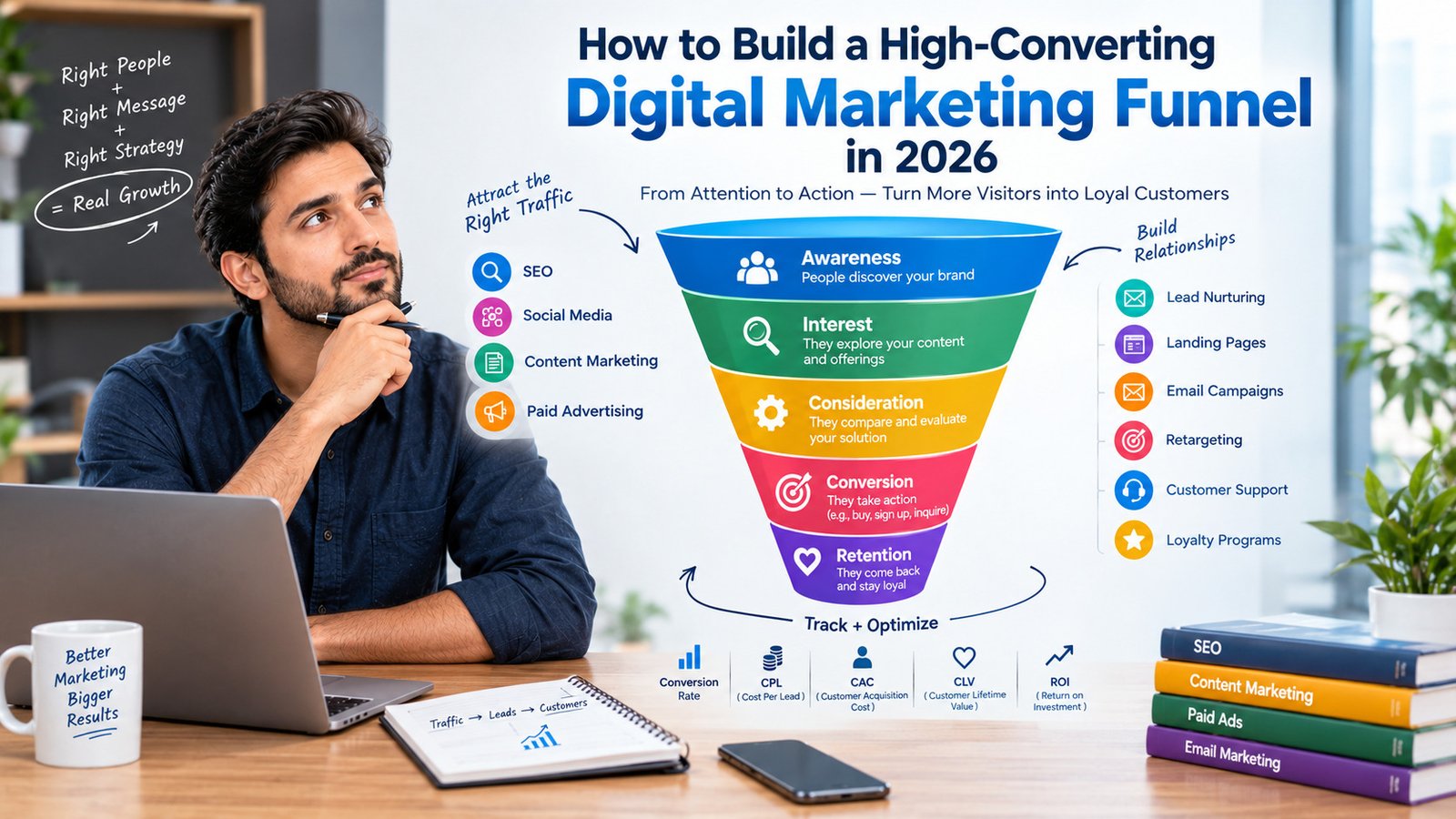
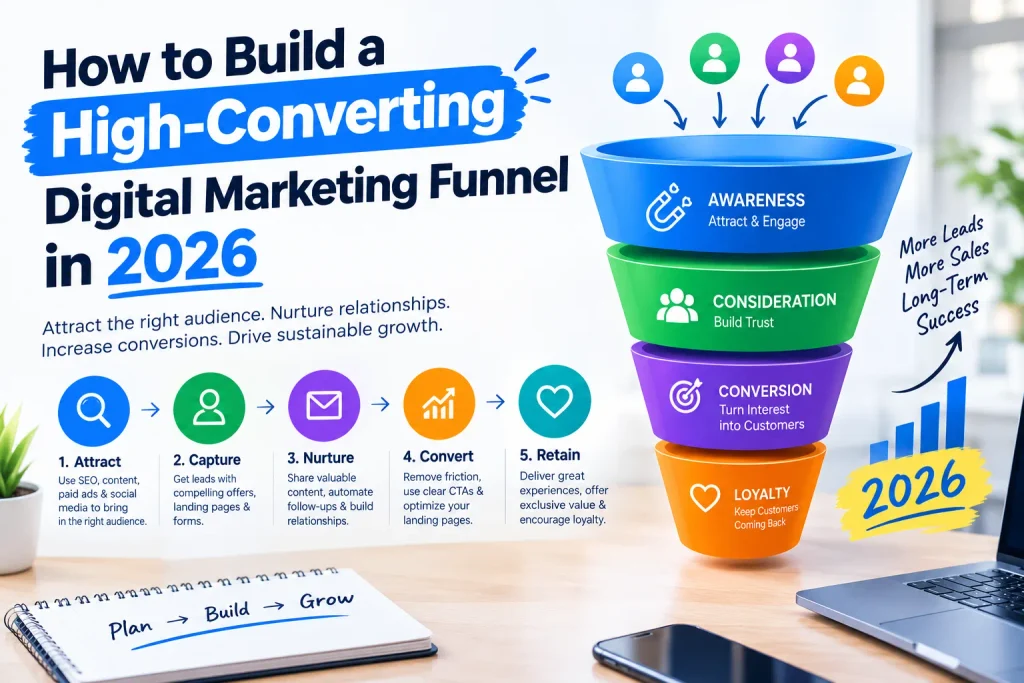
A marketing funnel represents the different stages a potential customer moves through before becoming a customer.
The core stages include:
- Awareness: People discover your brand or business.
- Interest: Visitors start exploring your content, products, or services.
- Consideration: Potential customers compare solutions and evaluate your offer.
- Conversion: A visitor takes a desired action, such as making a purchase or submitting an inquiry.
- Retention: Existing customers return, engage, and potentially become repeat customers.
Understanding these stages helps businesses create content and campaigns that match what customers actually need at each point.
2. Build Awareness With the Right Traffic Sources
The first step is getting your business in front of the right audience.
Instead of trying to be everywhere, focus on channels where your target customers are already active.
Key traffic sources include:
- Search Engine Optimization (SEO): Attract people actively searching for relevant information or solutions.
- Social Media: Build awareness and engage potential customers through valuable content.
- Content Marketing: Publish educational blogs, guides, videos, and other resources.
- Paid Advertising: Reach targeted audiences through search and social advertising campaigns.
The goal isn’t simply to generate more traffic. It’s to generate relevant traffic from people who are more likely to become customers.
3. Turn Website Visitors Into Leads in Digital Marketing Funnel
Once someone reaches your website, you need to give them a clear reason to take the next step.
A strong landing page should communicate three things quickly:
What you offer, why it matters, and what the visitor should do next.
Effective conversion elements include:
- Clear and compelling headlines
- Strong calls-to-action (CTAs)
- Simple lead forms
- Relevant offers or lead magnets
- Customer testimonials and social proof
- Easy-to-understand value propositions
Avoid overwhelming visitors with too many options. A focused page with one clear objective can make the customer journey much easier.
4. Nurture Leads With Valuable Content
Not every visitor is ready to buy immediately.
Some prospects need more information before making a decision. This is where lead nurturing becomes important.
Use content to answer questions, address concerns, and demonstrate your expertise.
Examples of lead-nurturing content:
- Educational email sequences
- Case studies
- Product or service guides
- Webinars
- Frequently asked questions
- Comparison content
- Industry insights
Instead of constantly pushing a sales message, focus on providing useful information that helps prospects make informed decisions.
5. Optimize the Conversion Stage
When a prospect is ready to take action, remove unnecessary friction from the process.
Your conversion experience should be simple, clear, and trustworthy.
Focus on:
- A clear offer
- Strong calls-to-action
- Transparent pricing or next steps
- Trust signals
- Simple forms or checkout processes
- Mobile-friendly design
Even small improvements to a landing page or checkout experience can make a meaningful difference when tested properly.
6. Focus on Customer Retention
The funnel doesn’t end after someone becomes a customer.
Retaining existing customers can be an important part of sustainable growth because businesses can continue building relationships after the initial conversion.
Use strategies such as:
- Personalized follow-up emails
- Helpful educational content
- Customer support
- Loyalty programs
- Product recommendations
- Exclusive offers
The objective is to turn a one-time interaction into an ongoing customer relationship.
7. Track the Right Marketing Metrics for Digital Marketing Funnel
A funnel should be measured at every stage.
Instead of focusing only on website traffic or social media likes, track metrics that show whether your marketing is actually moving people toward business outcomes.
Important metrics include:
- Conversion Rate: Percentage of visitors who complete a desired action.
- Cost Per Lead (CPL): How much it costs to generate a lead.
- Customer Acquisition Cost (CAC): Average cost of acquiring a customer.
- Customer Lifetime Value (CLV): Estimated value a customer generates over their relationship with the business.
- Return on Investment (ROI): The financial return generated compared with marketing costs.
These metrics help identify where your funnel is performing well and where improvements may be needed.
8. Continuously Test and Improve
A high-converting funnel isn’t something you build once and forget.
Customer behavior, competition, platforms, and market conditions change constantly. That’s why continuous testing is essential.
Test different:
- Headlines
- CTAs
- Landing page layouts
- Offers
- Email subject lines
- Ad creatives
- Content formats
Use actual performance data to determine what works for your specific audience rather than relying only on assumptions.
Final Takeaway
A successful digital marketing funnel connects every part of your marketing strategy—from attracting the right audience to converting and retaining customers.
SEO, social media, paid advertising, content marketing, email campaigns, and landing pages become more effective when they work together as part of a structured customer journey.
The goal isn’t simply to get more visitors. It’s to build a system that consistently turns the right visitors into valuable customers.
As digital marketing continues to evolve in 2026, businesses that focus on creating relevant experiences, measuring meaningful results, and continuously optimizing their funnels can build a stronger foundation for sustainable growth.
Frequently Asked Questions (FAQs) for Digital Marketing Funnel
1. What is a digital marketing funnel?
A digital marketing funnel is a structured customer journey that guides people from discovering a brand to becoming customers and, eventually, returning customers.
2. What are the main stages of a digital marketing funnel?
The main stages are Awareness, Interest, Consideration, Conversion, and Retention. Each stage focuses on moving potential customers closer to taking action.
3. How can I increase conversions in my marketing funnel?
You can improve conversions by using clear CTAs, relevant landing pages, strong value propositions, customer reviews, simple forms, and continuous testing.
4. Which channels can I use to attract visitors to my funnel?
Common channels include SEO, social media, content marketing, email marketing, and paid advertising. The right combination depends on your target audience and business goals.
5. Why is lead nurturing important?
Lead nurturing helps build trust with prospects who aren’t ready to purchase immediately. Educational content, email campaigns, case studies, and useful resources can help move them toward a decision.
6. What marketing metrics should I track?
Important metrics include conversion rate, Cost Per Lead (CPL), Customer Acquisition Cost (CAC), Customer Lifetime Value (CLV), and Return on Investment (ROI).
7. How often should I optimize my digital marketing funnel?
A funnel should be reviewed and optimized regularly. Testing headlines, CTAs, landing pages, offers, and content can help identify opportunities for improvement.
8. Does a digital marketing funnel work for small businesses?
Yes. Small businesses can use funnels to organize their marketing activities, attract relevant audiences, generate leads, and build long-term customer relationships.
9. What is the difference between traffic and leads?
Traffic refers to people visiting your website, while leads are visitors who take an action that allows the business to continue communicating with them, such as submitting a form or making an inquiry.
10. Can SEO and paid advertising work together in a marketing funnel?
Yes. SEO can help attract organic traffic over time, while paid advertising can provide targeted traffic more quickly. Using both can create multiple entry points into the funnel.
Visit Home